Showing posts with label Periodontal Disease 牙周病. Show all posts

19 May 2013

牙周病对身体健康的影响

牙周病的细菌感染,可能造成以下4大危机:

心内膜炎
牙周细菌经由发炎的牙龈血管进到血液,再附着到心内膜,就容易引发细菌性心内膜炎。
若是口腔内有伤口,这些细菌可能接触伤口,并随着血液在人体内四处流窜,严重者还可能引发败血症等全身性感染,发言因子也可能使血管壁细胞增生,增加心肌梗塞和中风的危机。
不止如此,只要细菌侵入牙龈深部,引发牙龈和齿槽骨发炎,也可能导致蜂窝性组织炎。

糖尿病
从临床观察,牙周病和糖尿病彼此互为影响的高危险因子。由于糖尿病患者可能身体反应较常人特殊,因此比非糖尿病患者更易加剧罹患牙周病的破坏,而且身体发炎血液会全身性流动,代谢也会产生一定程度的问题。牙周疾病如果拖太久没有治疗,也可能会因为细菌产生毒素病变损害严重,以致血糖升高,进一步恶化糖尿病。

孕妇早产及新生儿体重不足
在美国有研究发现,牙周病妇女因为前列腺素水平升高,因而容易早产或是胎儿过轻的比例,高出一般妇女7倍以上。

慢性阻塞性肺炎
研究发现,牙齿健康与慢性阻塞性肺炎(COPD)之间存在关联性,同样也是因为口腔细菌会经由血液进入到病患者肺部,并导致炎症反复发作。


09 August 2012

糖尿病与牙周疾病


为什么牙龈疾病在糖尿病患身上更明显?
questionmark6
身为糖尿病患者,你对感染疾病的免疫反应有所下降。如果你的糖尿病未能得到很好的控制,你就有可能患上牙周疾病,同时你也患有牙周脓肿的可能牙周脓肿是围绕特定牙龈组织的肿大。这些牙龈组织感染、发炎,并常伴有疼痛。牙周疾病的存在也可能影响身体对胰岛素的运用。这就导致了你的糖尿病更难以控制,而你的牙周疾病也就变得比非糖尿病病人更为严重。

还会有什么其他的症状吗?
除了更易患有牙周疾病外,你可能还会发现以下病状:
  • 损伤愈合过程的减慢(包括口腔溃疡、拔牙伤口、口腔手术伤口)
  • 唾液流量低
  • 口腔或舌上的烧灼感
这些症状较易在你糖尿病未能很好控制的情况下发生。

糖尿病是一种严重的疾病,它使患者的身体失去对血糖的控制能力。它可由身体中产出不足,或身体运用荷尔蒙的能力不足而产生。
此外,如果你是一名患者,你需要保持口腔和牙龈免受感染。这对于你控制糖尿病病情也具有重要意义。

牙周疾病最近被认为是第六个糖尿病的主要并发症。糖尿病病患牙周疾病的比率更高,病情更重,病程更快。

06 August 2012

Gum Disease—The ‘Sixth’ Major Complication of Diabetes


Why is gum disease significant to me as a diabetic?
As a diabetic, you have a poorer immune response to infection. If your diabetes is not well-controlled, you are more likely to have periodontal disease. You may also develop abscesses (gum boils). Abscesses are swellings of the gums that have become infected and are often painful. The presence of periodontal disease may also affect your body’s ability to process and use insulin. This may cause your diabetes to be more difficult to control, resulting in your periodontal disease becoming more severe than a non-diabetic.


What other symptoms may I have?
In addition to being more susceptible to periodontal disease, you may also experience:
  • Delayed wound healing (mouth ulcers, tooth sockets after extractions, oral surgical wounds)
  • Decreased or reduced flow of saliva
  • Burning sensation in the mouth or the tongue

These symptoms are more likely to occur if your diabetes is not well-controlled.

How can I prevent Periodontal Disease?

Since bacteria in plaque cause the disease, you have to remove plaque from your teeth daily by careful, effective brushing and flossing. Regular visits to your dentist are also necessary. Your dentist will check the status of your gums and teeth, and perform a professional cleaning to remove the calculus and plaque that has built up in areas that have missed out during your own cleaning. If you have already been treated for periodontal disease, you will require more frequent visits to your dentist to check for recurrence of disease for you maintenance care.

Diabetes is a serious disease in which the body loses its ability to control the level of sugar in the blood. It is caused by either a deficiency in insulin production, or an inability of the level body to utilize the hormone.

It’s essential for diabetics to monitor and keep their condition under control. While some control their diabetes with insulin, most control it through medication, diet and exercise. In addition, if you are a diabetic, you need to keep your mouth and gums free from infection, as this may have a significant impact on the control of your diabetes.

Diabetics have a higher prevalence of periodontal disease as well as more severe and more rapidly progressive forms of periodontal disease than non-diabetics. Individuals with poorly controlled blood sugar levels also tend to exhibit more periodontal disease than well-controlled diabetics.

30 May 2012

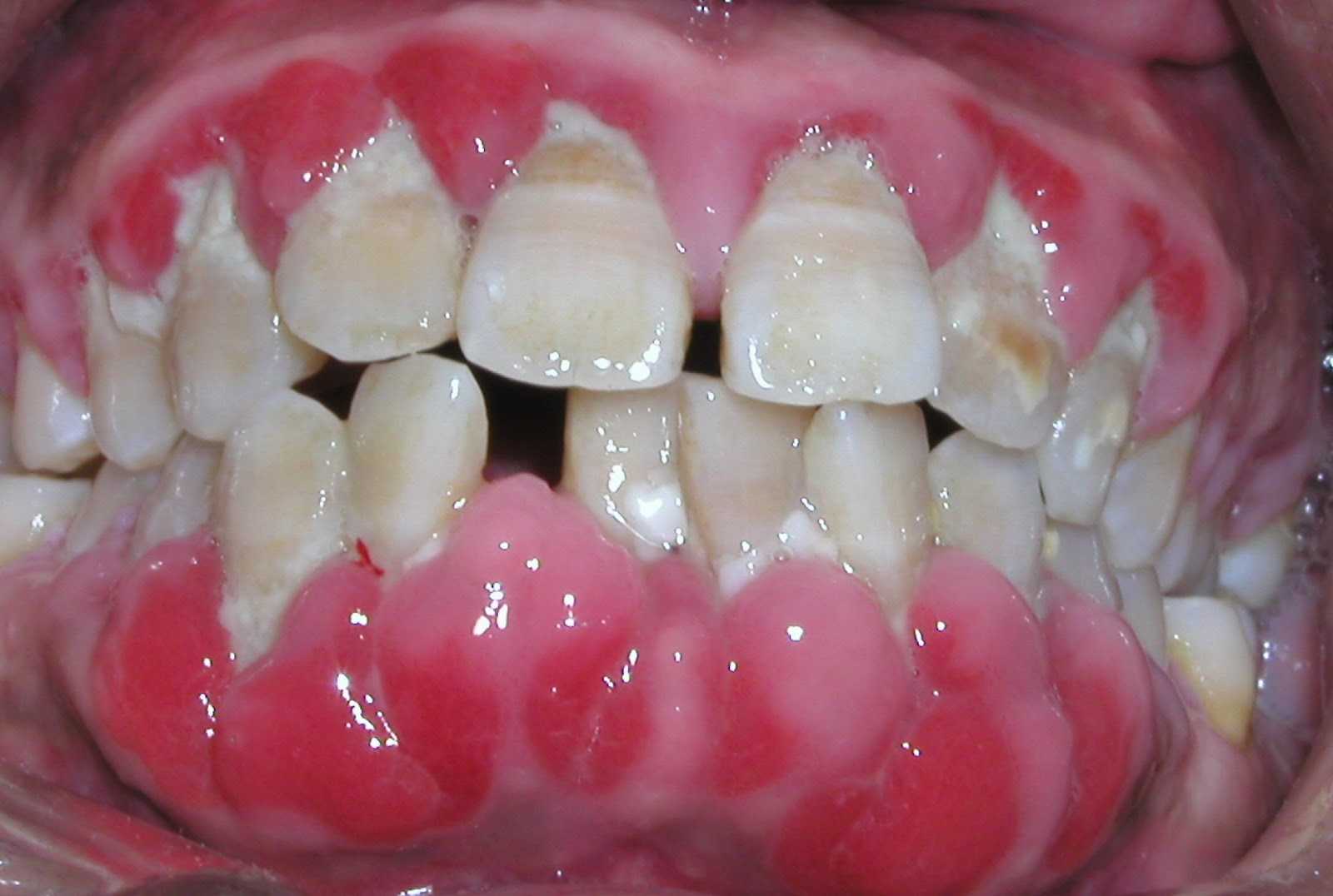
GUM SWELL!

Several reasons of gum swelling

There are a number of factors that can cause swollen gums:
1.    Gingivitis
2.    Drugs induced gums to get bigger
3.    Mouth breather
4.    Hormones
5.    Vitamin C deficiency
6.    Diseases

1.    Gingivitis
Gingivitis is due to the long-term effects of plaque deposits. Plaque and tartar irritate and inflame the gums. Bacteria and the toxins they produce cause the gums to become infected, swollen, and tender. Without proper brushing, gingivitis won’t go away. 
 
2.  Drugs induced gums become bigger 
There are several drugs that can cause your gums to get bigger which is called drug-induced gingival hyperplasia. It can cause your gums to look like they are squeezing out of the spaces between your teeth and growing over your teeth

There are a few categories of drug that can cause this:
·       Anticonvulsant : e.g. phenytoin, primidone, valproate
·       Calcium channel blockers: e.g. nifidepine, verapamil
·       Immunosuppresants: e.g. cyclospori


3.  Mouth breather 
You may irritating your gums if find yourself breathing through your mouth very often. It is presumed that since the air you breathe in is drying your gums, they compensate by enlarging the blood supply and getting puffier to ensure that they don’t dry out.

4.  Hormones 
Aldolescents that are going to puberty are extremely susceptible to gingivitis.
Pregnant women are very susceptible to gingivitis due to high levels of progesterone (increase the permeability of blood vessels in the gums) in their bodies.


5.  Vitamin C deficiency 
If you aren’t getting enough vitamin C in your diet, your gums can get really puffy and red.

6.  Diseases 
Ø Diabetes mellitus 
Ø Leukemia
Ø Cancer
Ø Sarcoidosis
Ø Wegener’s granulomatosis
 Ø Autoimmune disease 
 All can cause enlarged gums.


21 February 2012

SMOKING AND GUM


Smoking may be responsible for more than half of the cases of periodontal disease among adults in this country.

          Tobacco use reduces the delivery of oxygen and nutrient to gingival tissue, impairs body defence mechanism making smokers more susceptible to infection like periodontal disease. In addition, following periodontal treatment or any type of oral surgery, the chemicals in tobacco can slow down the healing process and make the treatment result less predictable.

As a smoker, you are more likely than non-smokers to have the following problems:-
·        Oral cancer                  
·        Bad breath
·        Stained teeth
·        Tooth loss
·        Lose of taste
·        Less success with periodontal treatment
·        Less success with dental implants
·        Gum recession
·        Mouth sores

Quitting seems to gradually erase the harmful offeets of tobacco use on periodontal health.
Smoking causes 50% of gum disease. If you smoke >20 cigarrettes a day, risk of losing your teeth is very high. For the sake of your oral health, quit smoking or smoke  < 5 cigarrettes a day.


抽烟与牙周病


吸烟是引起牙周病的促进因素之一
烟草燃烧的热和积聚的产物是局部性刺激剂,使牙龈角化增加和牙面出现棕色柏油样沉积物,促进牙菌斑和牙石量增多,易诱发或加重牙周疾病。此外,吸烟可以使口腔粘膜形成白斑,长期含着烟在上,下唇间,会使口腔的灰白斑继续受高温的刺激,而出现皲裂和溃疡。经久不愈的溃疡,也是致癌的因素之一。


专家建议,吸烟对人体有百害而无一利,应立即戒烟或尽量少抽直到彻底戒掉。此外,一般情况下,正常人每半年或一年洗一次牙即可,对于吸烟者,最好三个月左右洗一次。定期洗牙,不仅清洁了牙齿,而且牙医在洗牙的同时又为洗牙者检查了一次牙齿,也便于及时发现问题及时治疗。

02 February 2012

COMMON ORAL CONDITIONS FOR ADULTS


 WHAT YOU CAN DO? 

TOOTH DECAY
1.   Have a look in your mouth regularly. Gently ‘lift your lip’ and look at your teeth near the gum line. You may see some early signs of tooth decay. Early decay may look like a white spot near the gum line. A dark spot may be decay or may be stain.
2.   Use fluoride toothpaste at least twice daily, especially before bedtime.
3.   Use floss or other special cleaning aids to clean between teeth.
4.   Make changes to your diet to reduce sugar intake

GUM DISEASE
1.   Self examination for signs of gum disease

1.   Where thorough plaque removal proves difficult, the use of mouthrinse may help prevent build up of plaque.
2.   A powered tooth brush may be of some special assistance for some people.
3.   Special aids (except floss) to help remove plaque between teeth include interdental brushes, floss holders and toothpicks.


TOOTHWEAR FROM TOOTHBRUSHING
1.   Always use a soft toothbrush.
2.   Use a gentle circular motion at the gum line.
3.   Always let your toothbrush do the work! You don’t need to apply pressure.
4.   The oscillating action of a battery-powered toothbrush can reduce the risk of abrasion that is caused by improper brushing action (scrubbing).


TOOTHWEAR FROM ACIDS
1.   You need to see your doctor if you suspect that you have gastric reflux.
2.   Do not brush your teeth after consuming acidic food or drinks. Wait at least 30 minutes.
3.   You may need additional fluoride protection if dental professional confirm you have dental erosion.


TOOTH SENSITIVITY
1.   Consult your dentist on the right brushing techniques.
2.   Brush your problem areas gently using a soft bristle toothbrush.
3.   Use desensitizing toothpaste which will soothe your teeth’s sensitive nerves.

28 January 2012

ORAL HEALTH FOR ADULTS


Common oral conditions in adults can include:
1.   Tooth decay
2.   Gum disease
3.   Tooth wear
4.   Dry mouth
5.   Tooth sensitivity

TOOTH DECAY (CARIES)
The risk of tooth decay may be increased due to:
·         Dry mouth
·        Consuming too many sugary snacks or drinks
·        Inadequate of daily fluoride protection
Ineffectiveness of plaque removal

 
Obvious/well known tooth decay causes:
·       Candy/sweets.
·       Chocolate
·       Fizzy drinks and fruit juices
·       Biscuits/cookies
·       Ice cream
·       Jam/jelly

Decay in adults can be common around fillings and between teeth. A particular problem may be decay on the root surfaces of teeth when gum recedes. When gum recedes, teeth may appear longer, as the root of the tooth becomes more visible. 

 
GUM DISEASE
Gum disease is preventable by thoroughly removing plaque everyday, but daily habits can be disrupted when you are too busy or too stressed.
As plaque buildup in hard-to-reach places, they can penetrate below the gum line causing inflammation and ulcers.

Watch out the signs of gum disease:
·       Bleeding gums when brushing and flossing
·       Red, puffy gums
·       Bad breath
·       Bad taste in the mouth
·       Spongy, soft gums
·       Tenderness of gums

 
TOOTH WEAR FROM TOOTH BRUSHING

You can wear away (abrade) your teeth at the gum line by using a toothbrush that is too hard or by using a scrubbing action when brushing your teeth. This can also contribute to causing receding gums.

TOOTHWEAR FROM ACIDS

Acids can dissolve (erode) enamel off teeth. Often teeth that appear to be severely worn down have been affected by erosion. The acids that erode tooth enamel usually come from foods and drinks or from gastric reflux. The frequent need to use antacid products or a sour taste in your mouth may indicate that you have gastric reflux. 
 
Causes of erosion:
·       Frequency of acidic drinks or foods intake
·       Sipping orange juice frequently
·       Chewing vitamin C tablets
·       Frequent intake of soft drinks or energy drinks
·       The generous use of vinegar in foods

 
TOOTH SENSITIVITY 
A short, sharp pain felt when eating or drinking hot, cold, sweet or sour foods or drinks.

What causes tooth sensitivity?
When tooth enamel is lost or when gums recede, the inner layer of the tooth (called dentine) may be exposed. Dentine is made of thousands of microscopic tubus (tubules) that lead to the nerves deep inside the tooth. Cold, heat and sugar cause the fluid movement in the dentine, which stimulates nerves, and resulting in pain.

Exposed dentine may be result of:
·       Brushing too near the gums
·       Gum diseases
·       Abnormal grinding of teeth (bruxism)
·       Acid erosion of protective enamel


17 October 2011

RISK FACTORS THAT INFLUENCE EXPRESSION OF PERIODONTAL DISEASE

Healthy Mouth = Healthy Body

Untreated periodontal disease in effect “seeds”
the bloodstream with disease - causing bacteria.


  • SMOKING – Smoking increases the risk of getting gum disease by 4x more than nonsmokers. It is responsible for more than half of the adult gum disease.
  • DIABETES MELLITUS – Diabetes is the sixth leading cause of death in U>S> Almost one-third of individuals with diabetes have severe periodontal disease.
  • OSTEOPOROSIS – Periodontal disease caused a 4x higher frequency of height loss in the jaw.
  • PRETERM BIRTH - Gums infected with periodontal disease are toxic reservoirs of disease causing bacteria. The toxins produced by the bacteria attack the gums, ligaments, and bone surrounding the teeth to produce infected pockets that are similar to large infected wounds in your mouth. The infected pockets provide access to your bloodstream allowing bacteria to travel throughout your body.Women with periodontal disease are 3-5 times greater risk of a preterm birth than those who have no gum disease.
  • HEART DISEASE - One potential risk factor for heart disease is advanced gum disease.Thus periodontal disease increases severity and risk of heart disease and stroke. Periodontal bacteria ( C-reactive protein CPR ) gains entry into the systemic circulation with bactermia causing changes in blood vessel walls and exacerbated atherosclerotic plaque. The connection between gum disease and heart attacks is higher than the connection between high cholesterol and heart attacks?
  • STROKE - Risk for stroke is 2.8 times greater for individual with gum disease than those without periodontal disease.
  • PULMONARY INFECTION AND ORAL DISEASES   -Inhaling harmful bacteria from the infection in your gums into your lungs which can cause pneumonia, bronchitis, emphysema, chronic obstructive pulmonary disease.

02 October 2011

WOMEN & PERIODONTAL DISEASE

A WOMAN’S NEEDS
A woman’s body undergoes changes during puberty, menstruation, pregnancy and menopause. The hormonal changes that occur at these stages may affect the gums and increase the woman’s risk to periodontal (gum) disease.

WHAT IS PERIODONTAL DISEASE?
Periodontal disease or gum disease is caused by bacteria and toxins (poisons) found in dental plaque. Dental plaque is the sticky, colourless layer that forms on teeth constantly. The bacteria and toxins cause the gums to swell slightly, turn red and bleed easily. Depending on where this occurs, you may not be able to detect this. This stage is known as gingivitis. There is little or no pain. The most common complaint at this time is “My gums bleed when I brush my teeth”.

As the disease continues, the bacteria and toxins then invade the gums and destroy the bone supporting the teeth. The teeth become loose and may be lost. This stage is periodontitis. Most of this time, pain occurs at the later stages of the disease.

If you don’t know the state of your periodontal (gum) health, ask at your next dental visit. Hormonal changes can be a contributing factor in increasing your chances of getting gum disease or make an existing gum problem worse.
Healthy gums
Gum disease (Periodontitis)


PUBERTY AND MENSTRUATION
During puberty, there is an increased level of hormones such as progesterone and oestrogen. These hormones may cause an increase in the gums’ sensitivity and lead to a greater reaction to food particles and plaque present. The gums become swollen turn red and may feel painful to the touch.

Gum swellings between teeth
Some women experience similar symptoms 3 to 4 days prior to their period. Others may experience menstruation gingivitis which is characterized by bleeding gums, a bright red swelling of the gums between teeth and sores or ulcers in the mouth. This usually clears up once her period starts.

It’s important to keep good oral hygiene during these hormonal changes so that the bone and gums surrounding the teeth are not affected.

PREGNANCY
Pregnancy epuli
Women can experience pregnancy gingivitis beginning in the second or third month. It may increase in severity throughout the pregnancy. The gums become swollen, red, may be painful and may bleed. In some cases, the gums react strongly to food particles and plaque to form swellings, the swellings are called pregnancy epuli and are usually painless. Some of them disappear after pregnancy but some remain and may require removal by a dentist.

The best way to avoid these gum problems during pregnancy is to begin with healthy gums. If you are thinking of getting pregnant, visit your dentist for a dental check-up. Ask your dentist to check on the condition of your gums and how well you are brushing your teeth.

If you are pregnant, you need to know that your oral health can affect the health of your baby.

Early reports show that infection during pregnancy, including periodontal (gum) infection, may pose a risk for delivering a premature, low birth weight baby. Include dental health check-ups in your prenatal care. Preventive dental care will go a long way in ensuring a trouble-free dental status during your pregnancy.

ORAL CONTRACEPTIVES
If you are taking oral contraceptives (birth control pills or hormonal supplements), you may also be prone to similar gum conditions experienced by pregnant women. This is because the synthetic hormones in these pills copy the hormones in pregnancy. You will also need to know that certain antibiotics can interact with the oral contraceptives and lesson their effectiveness. As such, it is important to mention all medications that you are taking to your medical and dental care providers.

MENOPAUSE
Menopausal or post-menopausal women may experience discomfort on the mouth including pain and burning sensations in the gums tissue, altered taste and dry mouth. Hormonal replacement therapy (HRT) may relieve these symptoms but a consultation with a doctor is always required assess the risk and benefits of each woman first. “Saliva substitutes ” are available in the form of rinses and gels to lessen the effects of a  dry mouth and burning sensation if necessary.

CONCLUSION
Each phase of a woman’s life brings with it many changes. Your oral health at these times are important to your overall health and well-being. Careful attention to home dental care and regular professional check-ups will ensure healthy gums and teeth for a lifetime.